Garden · Aesthetics · Culture
The Rare Depth of Nitobe Memorial Garden
Memory, meaning, and the spirit of a Japanese garden abroad
I had always assumed that authenticity meant resemblance: the more closely a place looked like its source, the more authentic it was.
Then I walked into Nitobe Memorial Garden.
That visit changed the question for me. What a Japanese garden carries across is not only its form, but a way of reading the land, arranging space, and allowing meaning to be encountered through movement.
Contents
- 1|Not Every Japanese-Looking Garden Is a Japanese Garden
- 2|A Bridge Made Walkable
- 3|Bridge, Path, and a Life
- 4|Near the End, One Still Has to Return to the World
- 5|Not a Copy, but a Garden That Has Taken Root
- 6|A Living Site of Memory and Stewardship
- 7|What a University Campus Can Hold
- 8|Not a Landscape, but a Living Cultural Work
- FAQ
- References and Further Reading
1|Not Every Japanese-Looking Garden Is a Japanese Garden
As a visitor from Taiwan who has long cared about Japanese gardens, I have visited many Japanese gardens outside Japan.
Some of them contain most of the expected elements: stone lanterns, maples, water, curved bridges, dry gravel, even tea houses. Yet once inside, something still feels incomplete. It is not that they are unattractive. It is that the elements are present, but they do not quite guide the body, the eye, and the mind together. The places where one should pause do not hold the visitor. The places that should be half-hidden are too direct. Water, stones, plants, and paths seem to remain separate from one another.
Other gardens do feel genuinely Japanese in their appearance. They are beautiful, restrained, and visually convincing. That alone is already difficult.
A Japanese garden abroad does not become convincing simply by displaying Japanese elements. Appearance matters, of course. Proportion, planting, water, stones, paths, emptiness, and atmosphere must first come together with a quiet order. If the basic visual feeling is wrong, any later discussion of spirit or symbolism can easily become something added only in words.
But appearance is only the entrance.
A deeper difficulty lies in how stones are placed, how the path turns, where the view is held back, and where it opens. Stone lanterns, bridges, stepping stones, and water are not merely forms. They affect how one walks, where one stops, and how one begins to see the garden.
A good Japanese garden does not present its elements like objects in a display case. It places them inside the visitor’s movement. One slows down, pauses, turns, crosses, looks again. The scenery is not given all at once. Neither is the meaning.
At that point, the garden is no longer merely Japanese-looking. It begins to speak in the language of a Japanese garden.
But the best gardens usually go one step further.
They do not only ask whether the stones are well placed, whether the path turns correctly, or whether the lantern stands in the right location.
They also ask: what does the garden, as a whole, want the visitor to feel?
Many temple gardens in Kyoto remain powerful not only because the stones, sand, moss, and walls are beautiful in themselves, but because, together, they suggest a religious feeling, an awareness of impermanence, or a way of understanding life and the world. Without that deeper layer, a garden may still be beautiful. But it may not remain in the mind in the same way.
Nitobe Memorial Garden, located on the Vancouver campus of the University of British Columbia, is one of the few gardens abroad where, to me, appearance, arrangement, and meaning all feel present.
What first drew me in was its visual completeness. The turns of the paths, the placement of stones, the proportion of water, and the air left around the pruned trees are not arranged merely to create pleasing views. The garden is calm and restrained, yet it has a clear order. When one enters, the impression is not of one dramatic scene, but of the whole garden slowly taking hold of the body and mind.
I later came across a story often told about the garden: Emperor Emeritus Akihito, then Crown Prince of Japan, is said to have remarked, “I am in Japan,” while walking through Nitobe Memorial Garden. That sentence came very close to what I felt when I first entered.
The garden does not feel Japanese because it relies on obvious Japanese elements. It feels Japanese because the atmosphere, rhythm, and purpose of the whole place have come together.
Authenticity is not a checklist of Japanese elements. It is the moment when atmosphere, rhythm, placement, and purpose begin to work together.
But the real depth of Nitobe Memorial Garden lies beyond that.
It does not use authenticity merely to prove that it resembles Japan. Authenticity becomes the entrance. The language of the Japanese garden is used here to carry a person’s ideal, and also to carry the shape of a life.
To understand that, one has to return to the person the garden commemorates: Inazō Nitobe.
2|A Bridge Made Walkable
Inazō Nitobe may not be an unfamiliar name to many readers in Taiwan.
He was an important Japanese educator, agricultural scholar, international thinker, and the author of Bushidō: The Soul of Japan. One of his lifelong ideals was to become “a bridge across the Pacific,” helping Japan and the Western world understand one another more deeply.
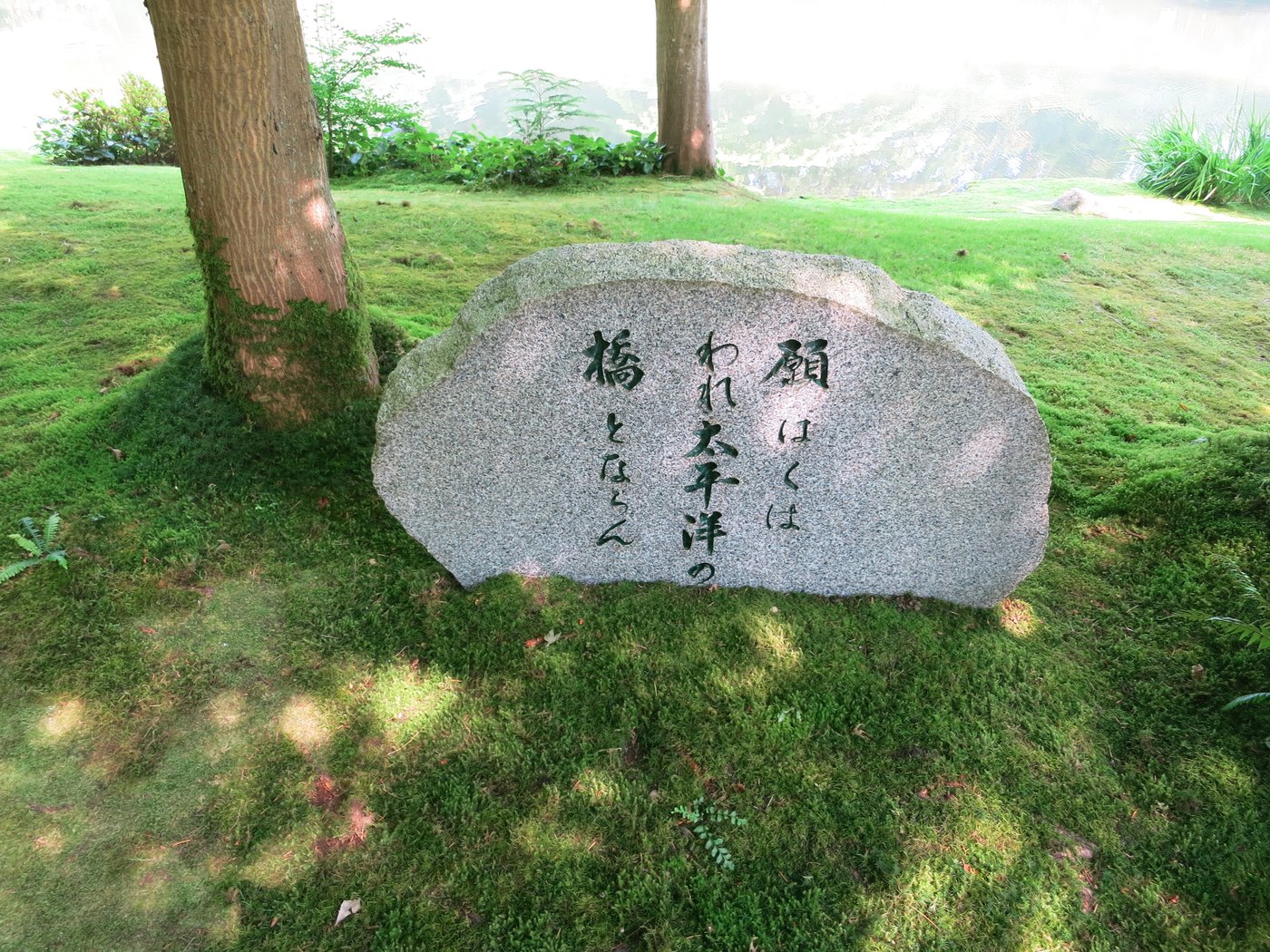
For that reason, a garden built in his memory should not simply be a garden that brings Japan to Canada.
If Nitobe wished to become a bridge, then the garden should not express Japan only as a form. It should express how two worlds meet.
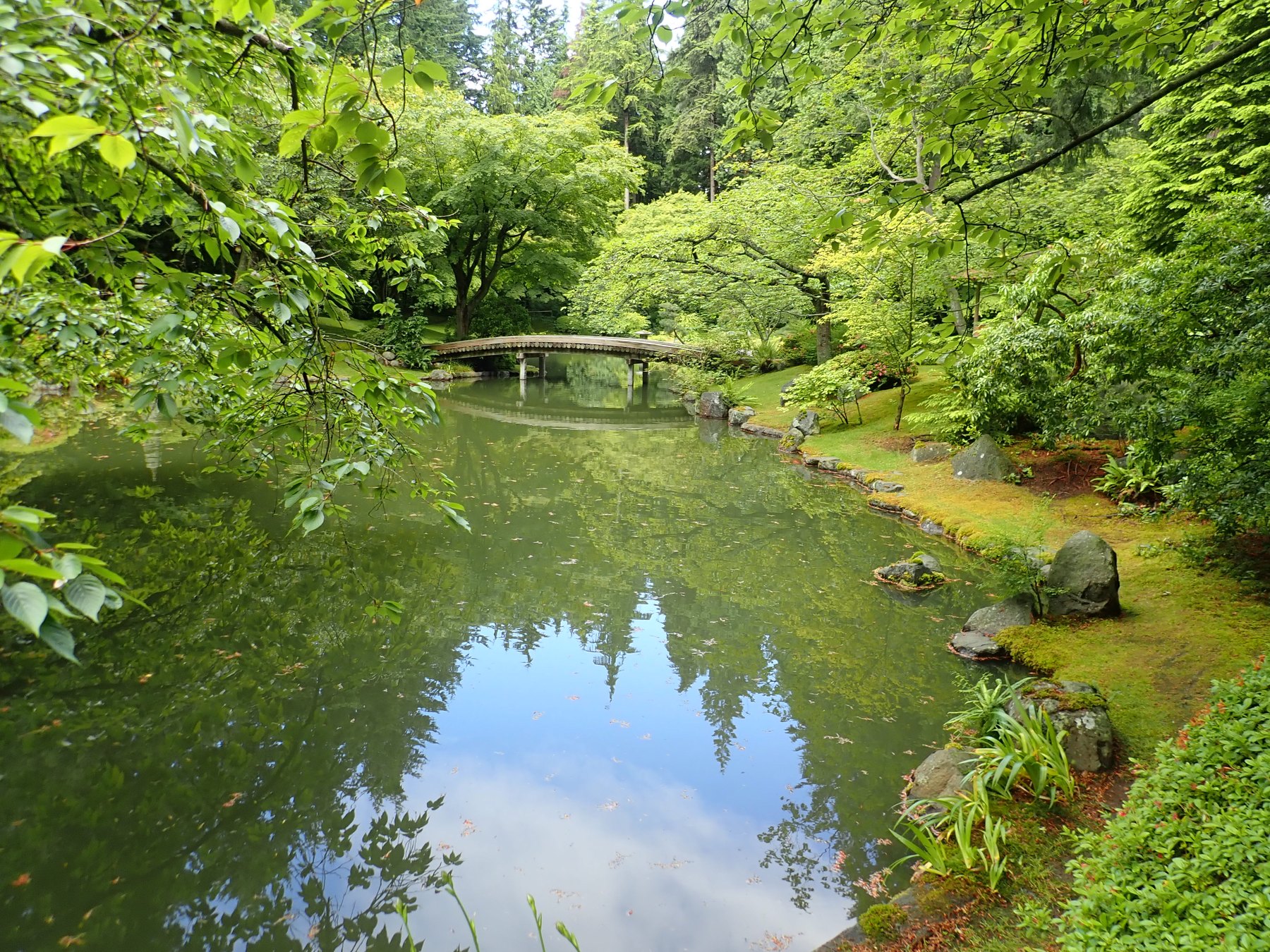
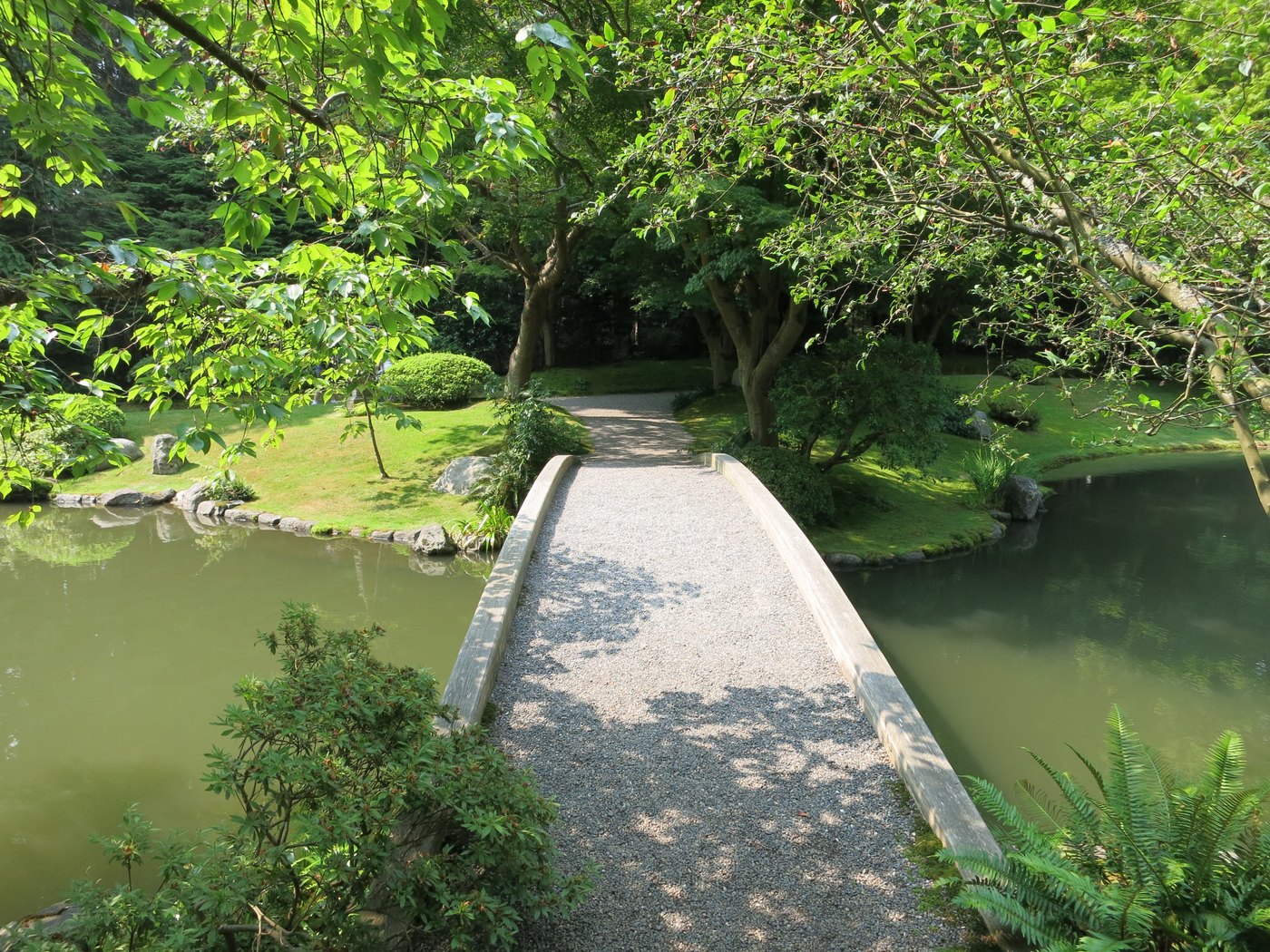
The water in the garden can be understood as the Pacific Ocean. On one side of the bridge are Japanese plants; on the other side are native North American plants. The bridge is therefore not merely a Japanese garden element, nor simply a practical route across the water. When one walks across it, one is also quietly moving between Japan and North America, between origin and new ground.
The pond is not merely scenery. The bridge is not merely form. Together, they allow symbolism not only to be seen, but to be crossed.
Symbolism is not only seen. It is crossed.
This arrangement responds directly to Nitobe’s ideal. Japan is not isolated and placed overseas as a cultural image. It is brought into relation with another land.
From Taiwan, another quiet crossing appears.
Nitobe was not only a figure in Japanese intellectual history. During the Japanese period in Taiwan, he was connected with reforms in Taiwan’s sugar industry. That history links him to Taiwan’s modernization and to the memory of sugar production.
The garden contains another unexpected Taiwanese connection: the bronze bust of Nitobe was created by Hsu Wen-long, the Taiwanese entrepreneur, art patron, and founder of the Chimei Group and Chimei Museum in Tainan.
Hsu was not only a business figure. He is remembered in Taiwan for building one of the country’s most important private museums and for making art, music, and cultural collections accessible to the public. His presence in the garden therefore adds more than a biographical footnote. It brings a Taiwanese cultural layer into a garden already shaped by Japan, Canada, and the ideal of a bridge across the Pacific.
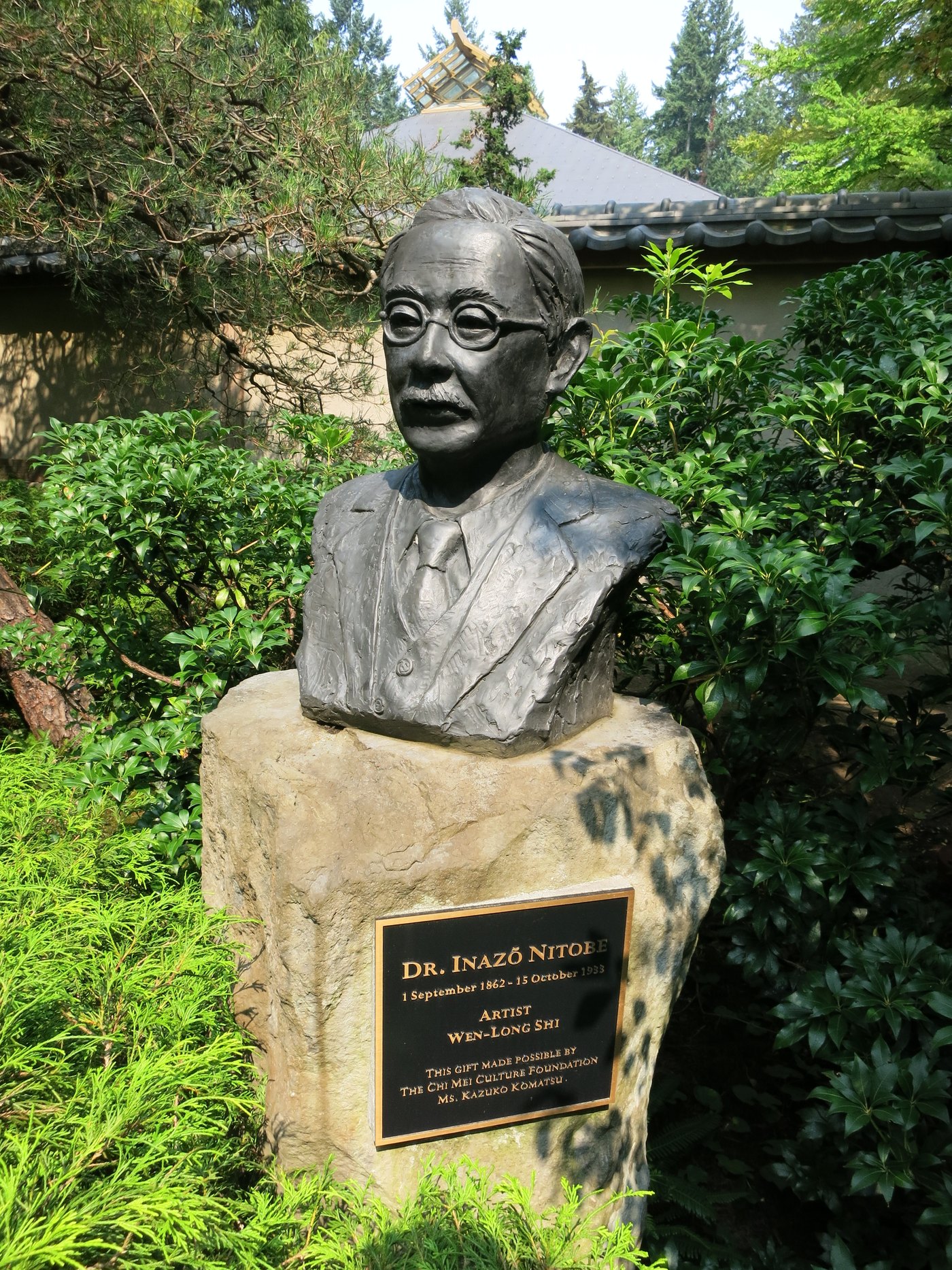
A Japanese scholar. A Japanese garden on a Canadian university campus. A bronze bust by a Taiwanese entrepreneur, collector, and art patron.
These three things meet quietly in Vancouver.
The connection does not change the garden’s main axis, but it deepens it. Nitobe’s dream was to become a bridge across the Pacific. In Vancouver, that bridge is not only Japan and North America. Quietly, Taiwan also enters the story.
The garden therefore does not feel like a Japanese landscape simply placed abroad. It feels like a meeting point. The idea of a bridge is not left as a phrase on a stone. It is built into the garden, and the visitor understands it by walking.
3|Bridge, Path, and a Life
The garden’s self-guided map offers a quiet clue: Nitobe Memorial Garden can be read as a symbolic journey through life. It also links the stone lanterns, often placed near path junctions, with choices in life.
That is not exactly the same thing as saying that the garden commemorates Inazō Nitobe. A memorial garden first draws attention to the person being remembered. A symbolic journey through life gradually turns the visitor’s attention back toward everyone who walks through the garden.
The remarkable thing about Nitobe Memorial Garden is that it does not keep these two layers separate. At first, one understands that this is a garden dedicated to a man who wished to become a bridge across the Pacific. But after entering, the bridge, paths, water, stone lanterns, turns, and views across the pond begin to turn that ideal into bodily experience. They also turn the memory of one historical figure into a way of thinking about one’s own life.
At the beginning, the path is not straight.
The view is not open. Trees and turns hold the sightline in, and one cannot see clearly how the route will unfold. One has to follow the stones underfoot and move forward without seeing the whole path ahead.
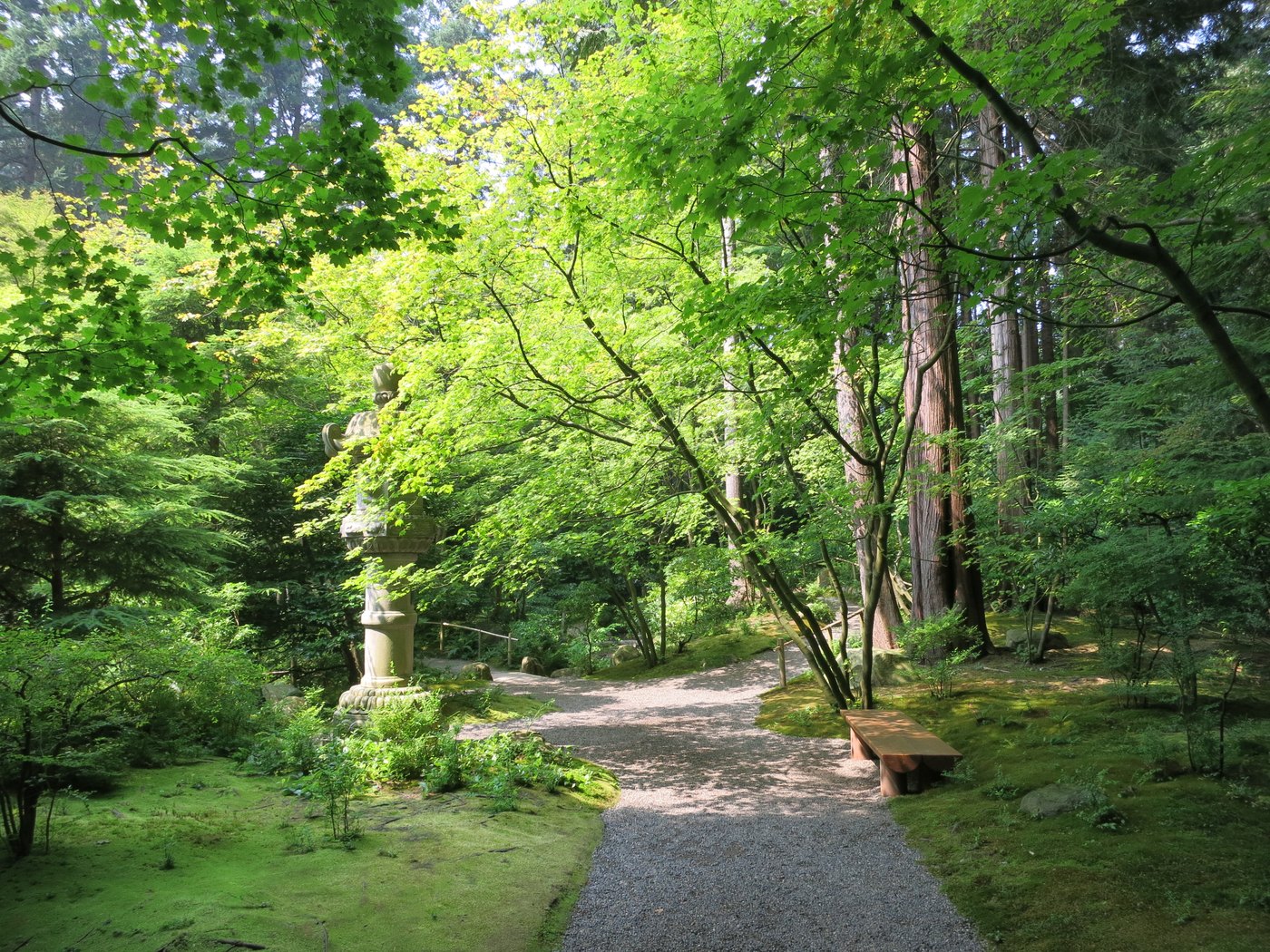
At that moment, life is not being explained. It is being felt through walking.
The beginning of the path carries something like the uncertainty of youth. There is light ahead, but also turns one cannot yet see beyond. One knows one is moving forward, but not yet what the next scene will reveal.
The stepping stones keep the body from moving too quickly. The turns prevent the eye from taking in the garden all at once. Trees hold the view back, then release it gradually. Before any meaning is explained, the garden has already changed the visitor’s pace.
By the time one reaches the bridge, the water no longer feels like scenery alone. It feels like a quiet threshold.
The bridge has already been prepared by Nitobe’s ideal. But when one actually crosses it, the meaning becomes less abstract. One side is left behind; another side opens. The scenery changes, and so does one’s position within the garden.
At that moment, the bridge is no longer only about Japan and North America. It also feels like one of those crossings in life after which one cannot return to exactly the same place.
The stone lanterns in this garden are also not merely decorative.
First, they are beautiful elements. They help create the atmosphere of a Japanese garden. But they are not only there to be admired. They often appear near junctions, changes of direction, or places where the body naturally slows down. One comes upon a lantern and pauses, looks, and becomes aware of the next step.
In that sense, the lantern has several layers. It is form, but also function. It changes how one walks. It changes how one sees the garden. And in a garden read as a journey through life, it gains another meaning: to pause beside a lantern near a fork in the path feels very close to the hesitation one feels when facing a choice.
Many important decisions happen in just this way.
One rarely stands above the whole map of life, sees every consequence clearly, and then chooses with certainty. More often, one reaches a bend, a junction, a place where the next part is still hidden. One pauses for a moment, hesitates, and then takes one path rather than another.
Some paths look smooth at the time and only later prove difficult. Some views cannot be seen by standing still. They appear only after one has passed through a more uncertain stretch and arrived at a certain position.
The skill of the garden lies in how little it announces.
The garden never needs to announce, “This represents life.” It only places the path, bridge, lantern, water, trees, turns, and views in relation to one another. As one walks, what first seemed to belong to Nitobe’s life begins to touch one’s own.
At a bend, beside a lantern, or on a path whose next turn is still hidden, one may suddenly remember one’s own route: the small choices that later became important, the paths not taken, the decisions that cannot be undone.
Toward the later part of the walk, the view gradually opens.
As the path curves along the pond, one begins to see, across the water, the path already walked on the opposite side. That view feels very close to a later stage of life: one is no longer only inside the path, trying to find the next turn. One can finally see, from a distance, how the earlier turns, crossings, hesitations, and missed paths formed a route.
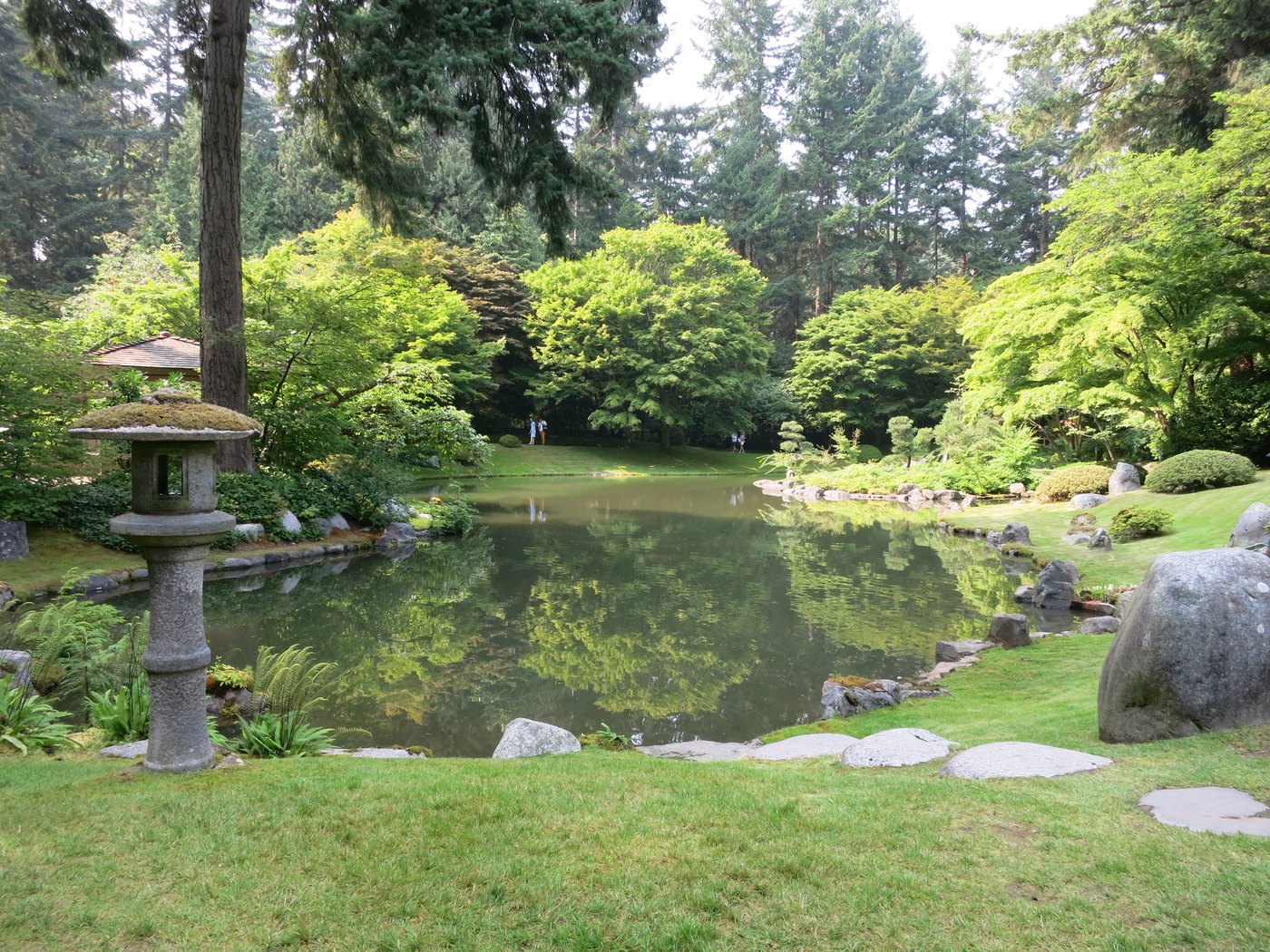
Not every step was right. Not every unchosen path was unimportant. But from that distance, one begins to understand how those choices led to the place where one now stands.
This is one of the most moving qualities of Nitobe Memorial Garden.
It first allows the visitor to enter the life of Inazō Nitobe. But as one walks, it quietly leads the visitor back into one’s own life.
4|Near the End, One Still Has to Return to the World
The most complex feeling does not arrive at the beginning of the garden. It begins to rise near the end, when the circuit is almost complete and the exit is near.
By then, the bridge, forks, lanterns, water, and backward views have already brought one’s own memories into the garden. Near the end, the question is no longer only, “How did I arrive here?” It becomes: “How should I continue from here?”
As the circuit nears completion, the body naturally slows.
Not because the path is difficult. Not because the scenery suddenly becomes more beautiful. It is because one knows, with some quiet force, that the walk is almost over. The path already taken is behind. The path ahead is not long.
At that moment, one does not want to move too quickly.
One may even feel a slight reluctance to finish.
It is not fear, exactly. It is not sadness, exactly. It is a fine hesitation, something close to the feeling of later life: the first clear awareness that the road ahead is not endless. The past has already become the past. The future no longer feels as distant and indefinite as it once did.
The garden is no longer only asking the visitor to look back.
It begins to ask about what remains.
How should one continue?
With what kind of mind should one walk the rest of the path?
That question is heavier than memory alone. Memory concerns what has already happened. But near the end of the garden, one also senses that there is still a path ahead — just not an unlimited one.
At that moment, another thought may arise: should I go back? Are there paths I did not take that I should still try to see?
In the garden, one can turn back.
On one visit, I even tried walking backward for a few steps. It was only a small movement, but it felt strangely close to the wish one may have at a certain age: to return to the past and see whether another direction, another decision, another path might have opened a different life.
But walking backward does not bring time back.
In the garden, one can turn around. One can walk again. One can even take a few steps backward. In life, choices already made cannot be undone. A missed view may be seen on another round through the garden, but certain paths not taken in life remain only in memory or imagination.
When the route finally returns near the beginning, the feeling changes again.
It no longer feels like simply completing a circuit. It feels as if one life has been walked, and one is placed again before a choice: to leave the garden, or to walk another circle.
To walk another circle looks, at first, like beginning again. The bridge is still there. The water is still there. The forks are still there. But the second time through, the visitor is no longer quite the same. One may stop in a different place, look back from another angle, or take a path not chosen before.
The garden allows another round. Life does not truly return to the beginning. Some places become clearer when walked again; some missed paths can be taken on another circuit. But choices already made do not disappear simply because one later understands them better.
And no matter which path one chooses, the garden eventually returns to a beginning. That circular form is gentle, but it is also severe. It suggests return, but not erasure.
If one chooses to leave the garden, the feeling is not simple either.
The world outside reappears. Because the garden is so quiet and complete, leaving it can feel like returning from a place close to a Pure Land back into ordinary life. The reluctance to leave is not merely the reluctance to leave a beautiful garden. It feels more like a lingering attachment to the beauty of this world itself: one knows that a moment must pass, and yet one is unwilling to let it end.
This is close to what Japanese aesthetics calls mono no aware: not simple sadness, but an awareness that a beautiful moment is passing, and that its passing is part of what makes it precious.
So when I leave Nitobe Memorial Garden, the feeling is not simply peace, nor simply melancholy. It is difficult to describe. It feels as if one has briefly seen something more clearly and then been returned to ordinary life.
The world has not changed.
But the garden has quietly reordered something inside.
To see the path already walked is not to remain in the past. The garden does not give an answer. It only quiets the visitor, allows one to look back, and then returns one to the world.
When it is time to leave, one still has to step out.
When it is time to continue, one still has to move forward.
This is why Nitobe Memorial Garden feels so rare to me. It is not only visually convincing. It allows the language of the Japanese garden to become a spiritual experience felt through the body.
Its meaning is not simply explained.
It is walked.
5|Not a Copy, but a Garden That Has Taken Root
There is another difficulty: Nitobe Memorial Garden is not in Japan. It is in Canada.
A Japanese garden abroad cannot rely only on the origin of its materials. Stones and plants matter, but they do not by themselves make a garden live. Climate, soil, maintenance, and the hands that care for the garden all change once it leaves Japan. If a garden is carried abroad only as a finished image, it can easily become a specimen.
Nitobe Memorial Garden is different.
It is not simply Japan imported into Canada. It grew in Vancouver through local stone, local plants, Japanese plants, and the hands of Japanese-Canadian gardeners who helped build and care for it.
That makes it more than a Japanese garden designed in Canada.
It is a Japanese garden built, maintained, understood, debated, and gradually matured in Canada.
If the garden had simply reproduced Japan in Vancouver, it might not have fulfilled its deeper purpose. It has to contain both Japan and North America, both origin and new ground.
Taking root in another land is harder than remaining unchanged.
A garden that only tries to remain unchanged can become a copy. A copy may be refined and beautiful, but it may still have no real relationship with the place where it stands.
Nitobe Memorial Garden does not seal Japan inside Canada. It allows a Japanese garden to breathe again in Canadian ground. It accepts the climate, plants, materials, and care of that place. It also accepts that a living garden must change slowly over time.
This is not a lowering of standards.
It is the more difficult standard.
A copy only has to resemble.
A garden that has taken root has to live.
6|A Living Site of Memory and Stewardship
A garden that takes root in another land does not end with design.
It must be cared for, used, restored, debated, and remembered. Only then can it move from being a designed object to becoming a living place.
Nitobe Memorial Garden is not an isolated work of landscape design.
It is connected to the history of Japanese Canadians. During the Second World War, Japanese Canadians faced dispossession, incarceration, and forced removal from the West Coast. After the war, the making and later restoration of this garden became more than a memorial to Nitobe. It also became part of a larger process of cultural rebuilding, recognition, and memory.
For that reason, the garden is not only aesthetic.
It carries history. It carries wounds. It carries repair. It carries the slow process by which people and place rebuild a relationship.
This becomes clear in the later debates around restoration and renovation. In the 1990s, significant changes to the garden raised concerns among members of the local Japanese-Canadian community and gardeners connected to the site. What was at stake was not simply whether one stone or entrance looked better. The deeper question was whether the original design intent, the memory of the garden, and the experience of those who had long cared for it were being respected.
That left a strong impression on me.
If a garden is only a landscape project, renovation is mainly a technical matter. But if a garden carries cultural meaning, changing it is never simply a question of making it look better. It involves the original designer, the caretakers, the community’s memory, and the way a place faces its own history.
UBC later returned to this issue more thoughtfully, recognizing the contributions of Japanese-Canadian gardeners and moving the stewardship of the garden closer to the understanding of those who had long cared for it.
This reminds us that a true garden does not end when construction is complete.
A garden needs people to care for it. It ages. It changes. It is repaired. It is understood differently by different generations.
In that sense, a garden is close to life.
Whether a garden continues to live is not decided only by a plan or a design drawing. It depends on whether people are willing to care for it, remember it, and speak for it when necessary. Nitobe Memorial Garden is rare because it has passed through that time, and because it has also endured those arguments.
7|What a University Campus Can Hold
There is another reason Nitobe Memorial Garden feels so alive: it is not set apart only as a destination. It sits inside a university campus.
That makes a difference.
A garden visited as a destination can of course be loved and revisited. But a garden on a campus has another kind of closeness. It can enter the ordinary rhythm of student life. One may encounter it during orientation, pass near it between classes, visit because of a tea ceremony or cultural event, or return to it during a quiet hour when the rest of the campus feels too busy.
In that setting, Nitobe’s ideal of becoming a bridge is no longer only a historical idea or a design theme. The garden actually becomes a bridge: between Japanese culture and Canadian ground, between students and a tradition they may be meeting for the first time, between formal cultural practice and everyday campus life.
There is also another layer.
A university is a place of arrival and departure. New students come in; others graduate and leave. Some return years later and see the same campus with different eyes. In that rhythm, the garden’s life-journey structure feels especially natural.
A student may first enter the garden without understanding much of its meaning. Later, the same path may feel different. The bridge, the turns, the water, the pauses, and the return may begin to speak more clearly as one’s own life changes.
This is what a campus can hold when it is more than classrooms and buildings. It can hold a place where culture is not only studied, but quietly encountered. It can give students a garden they may not fully understand at first, but can return to over time.
Nitobe Memorial Garden does this without explanation. It simply remains there, letting each generation walk through it in its own season of life.
8|Not a Landscape, but a Living Cultural Work
What stays with me most about Nitobe Memorial Garden is not any single beautiful corner, but the total experience it creates.
The effect is not dramatic.
It is a quiet force.
One may enter simply intending to see a Japanese garden. But when one leaves, one feels that something has been quietly reordered inside.
This, to me, is what a Japanese garden can be.
It cannot be reduced to the words “Japanese style.” Nor can it be reduced to stone lanterns, maples, water, bridges, and gravel. It begins with form, but it does not stop there.
Nitobe Memorial Garden first succeeds in beauty, technique, and arrangement. Then it turns bridge, path, water, lantern, pause, and return into a spatial memory of Inazō Nitobe’s life. When one walks through it, one may feel not only his ideal and his life, but also one’s own choices, one’s unchosen paths, and the question of how to continue from here.
The garden is also rare because it did not bring Japan to Canada as a sealed image. It allowed a Japanese garden to take root in UBC’s ground, through local plants, local materials, Japanese-Canadian gardeners, long stewardship, community memory, restoration, and time.
The bridge connects Japan and Canada; quietly, Taiwan also enters the crossing. The path commemorates the life of Inazō Nitobe, but it also lets each person who enters look back on one’s own life.
And looking back is not the same as remaining in the past.
At the end, the garden returns the visitor to the ordinary world. It leaves a harder question behind:
having walked this far, how should one continue?
A garden’s deepest value may not lie in how closely its forms resemble a place elsewhere. It may lie in whether, after leaving, one still carries the path inside.
The road already walked is behind.
The road ahead is still there.
The garden does not answer for us.
It only allows us to walk forward a little more quietly.
FAQ
Where is Nitobe Memorial Garden?
Nitobe Memorial Garden is located on the Vancouver campus of the University of British Columbia in Canada. It is managed by UBC Botanical Garden. This article is not a real-time travel guide, so opening hours, admission, and event details should be checked through official UBC Botanical Garden information.
Who was Inazō Nitobe?
Inazō Nitobe was a Japanese educator, agricultural scholar, international thinker, and writer. He is widely known for Bushidō: The Soul of Japan. One of his lifelong ideals was to become a bridge across the Pacific, helping Japan and the Western world understand one another more deeply.
Why is Nitobe Memorial Garden often described as a bridge?
Because Nitobe wished to become a bridge across the Pacific. The garden turns that ideal into a spatial experience: water, bridge, planting on two sides, and the act of walking together create a quiet crossing between Japan and North America, between origin and new ground.
Why does the garden feel like a journey through life?
The garden is not arranged to be seen all at once. Through paths, bridges, stone lanterns, forks, water, pauses, and views back across the pond, it allows the visitor to feel choice, crossing, memory, missed paths, understanding, and departure through walking. It commemorates Nitobe’s life, but it can also lead visitors back into their own.
Why is this garden not simply “Japan brought to Canada”?
Because it does not depend only on visible Japanese elements. It allows the atmosphere, rhythm, placement, and meaning of a Japanese garden to work in another land. It uses local conditions, local plants, local materials, and long stewardship to let the garden take root in Vancouver rather than remain a copied image.
What is the Taiwan connection?
Nitobe was connected with Taiwan’s sugar-industry reform during the Japanese period. The bronze bust of Nitobe in the garden was created by Hsu Wen-long, the Taiwanese entrepreneur, art patron, and founder of Chimei Museum. This matters because it quietly extends the garden’s bridge. Nitobe’s ideal is usually understood as a bridge between Japan and the West, or between Japan and North America. But in this garden, Taiwan also enters the story: through Nitobe’s role in Taiwan’s sugar industry, through Hsu Wen-long’s sculpture, and through Hsu’s broader legacy of using art and culture to connect people across places.
Who was Hsu Wen-long, and why does he matter here?
Hsu Wen-long, also romanized as Shi Wen-long, was a Taiwanese entrepreneur, art patron, and founder of the Chimei Group and Chimei Museum in Tainan. In this article, he matters because the bronze bust of Inazō Nitobe in Nitobe Memorial Garden was created by him. His presence adds a quiet Taiwanese cultural layer to a garden otherwise centered on Nitobe’s Japan–Canada bridge. Hsu’s broader legacy also matters: through Chimei Museum, he worked to make art, music, and cultural collections accessible to the public.
What are Chi Mei and Chimei Museum?
Chi Mei began as a major Taiwanese industrial group founded by Hsu Wen-long. Chimei Museum represents another side of his life: the belief that private enterprise could support public access to art and culture. The museum’s collections include Western art, musical instruments, arms and armour, natural history, and fossils. For this essay, Chimei Museum matters not as a tourist destination, but as part of Hsu Wen-long’s broader cultural contribution.
Did Hsu Wen-long create other statues of Inazō Nitobe?
Yes. Hsu Wen-long’s connection with Nitobe was not limited to the bust in Vancouver. Nitobe is remembered in Taiwan for his role in early sugar-industry reform during the Japanese period. In 2012, a Nitobe statue sculpted by Hsu was installed at Hualien Tourism Sugar Factory, and reports also note that Hsu presented Nitobe statues to the Nitobe Memorial Museum and to Morioka City. This makes the Vancouver bust easier to understand. It is not an isolated curiosity, but part of a wider pattern in which Hsu used sculpture to remember figures connected with Taiwan’s history and modernization.
References and Further Reading
The following sources were used for background and fact-checking, including UBC Botanical Garden materials, Nitobe’s biography, garden history, the self-guided map, Taiwan-related context, and the Nitobe bust.
- UBC Botanical Garden|Nitobe Memorial Garden
- UBC Botanical Garden|Inazō Nitobe and Bushidō
- UBC Botanical Garden|History of the Garden
- UBC Botanical Garden|Nitobe Memorial Garden Self-Guided Tour Map
- Destination Vancouver|Nitobe Memorial Garden
- Imperial Household Agency|Their Majesties the Emperor Emeritus and Empress Emerita
- UBC News|Nitobe Memorial Garden bridges worlds
- North American Japanese Garden Association|Japanese Gardens in Canada
- National Diet Library|Nitobe Inazō
- Taiwan Ministry of Culture|Hsu Wen-long / Shi Wen-long
- Chimei Museum|About Chimei Museum
- Nippon.com|Inazō Nitobe and Taiwan’s sugar industry
- Wikimedia Commons|Nitobe Inazō by Wen-Long Shi
